
The Great Pacific Garbage Patch, also described as the Pacific Trash Vortex, is a gyre of marine litter in the central North Pacific Ocean located roughly between 135° to 155°W and 35° to 42°N.[1] The patch extends over a very wide area, with estimates ranging from an area the size of the state of Texas to one larger than the continental United States; however, the exact size is unknown.[2] This can be attributed to the fact that there is no specific standard for determining the boundary between the “normal” and “elevated” levels of pollutants and what constitutes being part of the patch. The size is determined by a higher-than normal degree of concentration of pelagic debris in the water. Recent data collected from Pacific albatross populations suggest there may be two distinct zones of concentrated debris in the Pacific.
http://en.wikipedia.org/wiki/Great_Pacific_Garbage_Patch
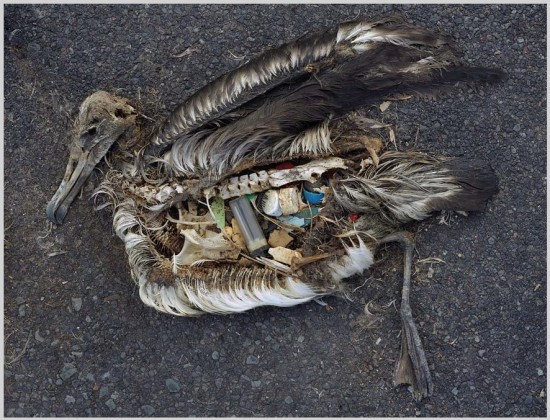

These photographs of albatross chicks were made just a few weeks ago on Midway Atoll, a tiny stretch of sand and coral near the middle of the North Pacific. The nesting babies are fed bellies-full of plastic by their parents, who soar out over the vast polluted ocean collecting what looks to them like food to bring back to their young. On this diet of human trash, every year tens of thousands of albatross chicks die on Midway from starvation, toxicity, and choking. About a couple months ago I was watching the history channel and they mentioned the Great Pacific Garbage Patch. I decided to look more into it since it seemed like an interesting thing.
http://www.aphotoeditor.com/2009/10/29/how-to-photograph-the-great-pacific-garbage-patch/
This seems like an interesting topic to know about since it shows to what extremes the amount of pollution we as humans carelessly dispose off into our environment. This garbage patch is of a large size and will take many years to fully break down. The decomposition of the plastic particles will eventually travel up the food chain becoming very poisonous to the marine wildlife.

Nice post...good pictures, info, links, and so-whats. Thanks for this one.
ReplyDelete